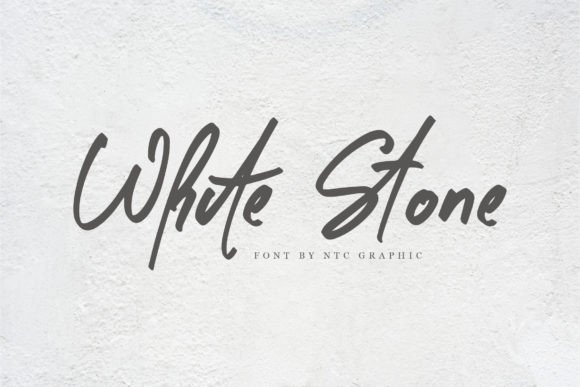
White Stone: A Script Font for Creative Projects
Working on a branding project for a small, independent café recently, I found myself searching for a font that could capture the warmth and authenticity of their vision. The owner wanted something that felt personal, almost handcrafted, yet still professional enough for a modern business. That’s when I discovered White Stone—a beautifully hand-brushed script font with unique character shapes that added just the right touch of personality to the design.
White Stone has a soft, flowing style that feels like it was written with a brush rather than typed on a keyboard. Its curves are elegant but not overly ornate, making it versatile for different design applications. The font carries a friendly and approachable mood, which made it perfect for a café that prides itself on community and comfort.
I started by testing it on a logo draft. The first thing I noticed was how well it worked as a headline font. It had enough detail to stand out without overwhelming the design. I paired it with a simple sans serif for the tagline, and the contrast created a balanced visual hierarchy that felt both modern and organic.
As I moved into packaging design, I experimented with using White Stone on product labels and coffee bags. The font’s natural flow gave each label a handmade feel, which aligned perfectly with the café’s brand story. It looked great on both light and dark backgrounds, and the subtle variations in stroke weight added depth without being distracting.
On social media graphics, White Stone brought a sense of creativity and energy. I used it for Instagram posts and promotional banners, where its expressive nature helped draw attention. It worked especially well in hero sections of websites, where a bold, readable headline is essential. The font’s legibility remained strong even at smaller sizes, which is a rare quality for a script font.
One of the things I appreciated most about White Stone was its flexibility. While it’s clearly a display font, it also held up in short-form text scenarios, such as on business cards or signage. The font’s alternates and ligatures allowed for more customized looks, which was helpful when creating a cohesive visual identity across different materials.
When working with clients, I always recommend testing a font in multiple contexts before finalizing a design. For White Stone, I suggested mockups on shop signs, menu boards, and even custom stickers. These real-world examples helped the client visualize how the font would look in their daily operations, which made the decision-making process smoother.
Font pairing is another important consideration. I found that White Stone pairs well with a clean, neutral sans serif for contrast. It also works nicely with a classic serif font for a more traditional feel. However, it’s best used as a primary or accent font rather than a body text font, as its intricate details can become difficult to read in long paragraphs.
For a branding project, consistency is key. White Stone helped maintain a unified look across all touchpoints, from digital assets to printed materials. Its ability to adapt to different formats—whether a website header, a flyer, or a product package—made it a reliable choice for the entire brand system.
I also checked the font’s file formats and licensing options. White Stone comes in multiple weights and includes support for various languages, which is important for any business looking to expand beyond a single market. The commercial license allowed me to use it in client projects without worry, which is a big plus for freelancers and creative studios.
Overall, White Stone has become one of my go-to fonts for projects that require a personal, artistic touch. It brings a sense of authenticity and creativity that many other script fonts lack. Whether you’re designing a logo, packaging, or social media content, White Stone offers a unique blend of elegance and approachability that can elevate any design.
For designers looking for a premium font that feels both modern and handcrafted, White Stone is definitely worth considering. Its versatility, readability, and aesthetic appeal make it a valuable addition to any typeface collection, especially for those working on branding, editorial design, or product-based businesses.
Using White Stone in a real-world project reminded me how much a well-chosen font can influence the overall tone and success of a brand. It’s not just about aesthetics—it’s about communication, emotion, and connection. And in that sense, White Stone delivers on all fronts.